
Coffee, a powerful word for many that could very easily be replaced with, well, ‘oxygen’ perhaps. Call it an addiction for your daily survival, with plenty of health benefits to its credit. And all of it without even befogging your mind – ask any addict.
As to the addiction, the reasons may be aplenty. May it be the rejuvenating aroma of the freshly roasted brew hitting your nostrils, the first sip – captivating your taste buds passing through your bloodstreams, stimulating that nervous system for your customary start of the day. Or maybe, holding that ‘coffee to go‘ in your hand just makes you look a tad more important, focussed and intelligent. Whatever it may be, the significance of this drink on our daily lives is one that demands love, affection and care.
The Stats
Per statistics, human sapiens consumed in excess of 9 billion (9,000,000,000) kilograms of coffee in the previous year. That translates to 26.1 billion USD in value – trivial by any means for sure – a mere 4% of the 608 billion USD [3] the United States spent on creating weapons for world peace last year for example. Just saying!
The Origins
As to the origins of coffee, it is a chicken or the egg argument. Some argue it originated from Yemen while others argue it transpired from Ethiopia to Yemen who then worked out coffee as a tradeable product. Trading of coffee as a consumable dates back 500 years when tons of beans were shipped from a port city in Yemen named Al Mokha – hence why we have the popular drink named ‘Mokha’ as a tribute to its origins.
Coffee and Me
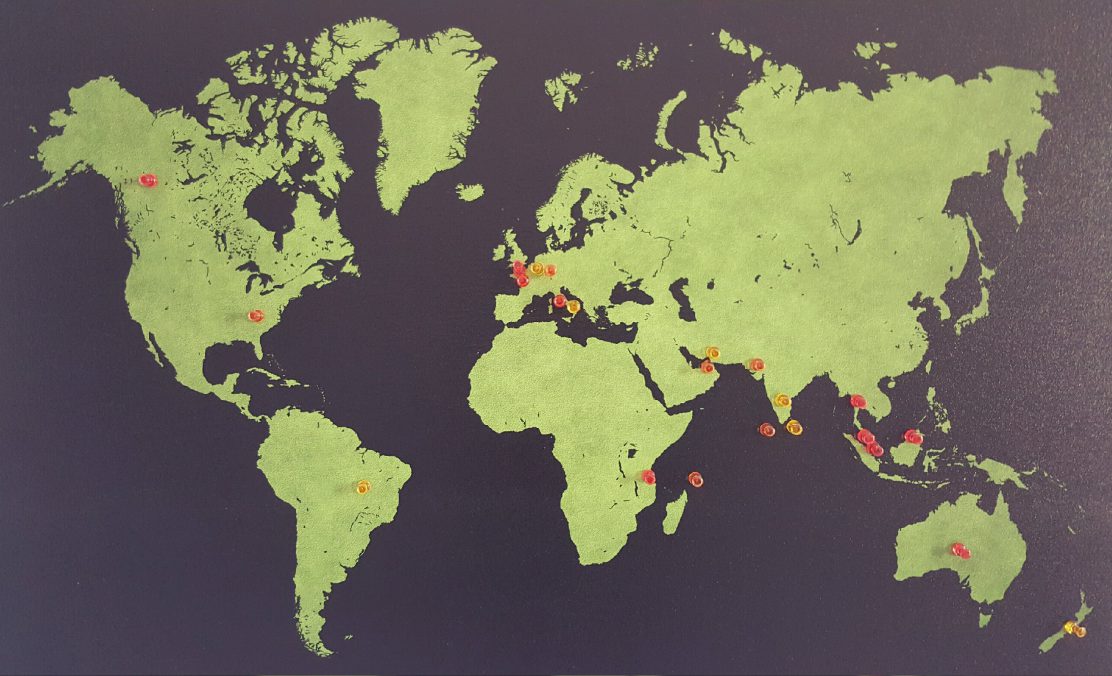
I have a little free time hobby during my travels in that I specifically go around looking for coffee roasters in random cities I end up in. I shall share here some of my highlights.
Roma
Walking through the cobbled pathways and the colonial architecture, there is no shortage of historic monuments, street artists, art deco cafes and classical Italian gourmet pasta and pizza cafes for some quintessentially Italian treats.
While wandering down the streets and before I could even Google ‘coffee roasters in Roma’, I noticed a rather happening café from a distance. A couple blinks of an eye, and looking closely, it appeared the bench/counter of the café’ was particularly crowded. But it was not a bar. There were no beer glasses on the bench, no cellars on the walls facing the bench either. But instead, it looked like cups of coffee on the benches and rather than the cellars, the walls were covered with a stretch of coffee brewing machines and barristers serving them. Bingo! As fate would have it, I had discovered my first Roman Roaster. It was called Caffè Sant’Eustachio.
A Google told me this was one of the most established in Roma, open since 1938. Needless to say I rushed into it. And while ordering my coffee, I learnt my Lesson 1 in Italian coffee: ‘Çaffe’’ is the Italian term for ‘Espresso’. After I had ordered my Caffe’ at the cash counter, I had to join the crew of people at the bench and hand over my receipt to the barista for my cup. While waiting, I learnt my lesson 2 about coffee culture in Italy – the locals drink their coffee fast, while standing by the bench. They almost gallop it. You hear a ‘Grazie’ [thank you] followed by a ‘Prego’ [has multiple meanings but used for ‘welcome’ in this context] and next minute, the coffee is no more.
In the following days, while sipping coffee with my Italian colleagues, another conscience struck me. That was my lesson 3 – Italians drink their coffee in small quantities – regardless of whether it is a single/double shot Caffe’, Lungo [Italian for ‘Americano’], the classic Cappucino or any other on the lengthy list.
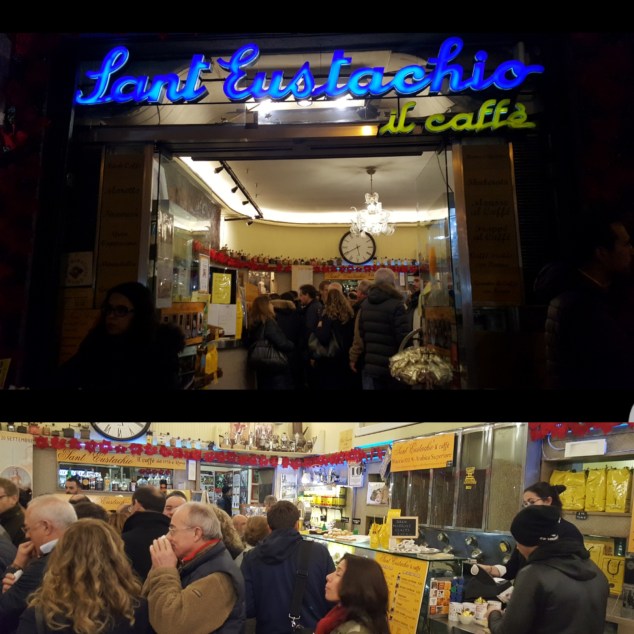
Sant’eustachio in Roma – my first Roman coffee Roaster discovery
Learning my ropes of Italian coffee rather quickly, I happened to explore a few more. One stand out was a visit to another in the old town named Tazza D’oro [translated ‘Gold Cup’]. This was another of the more popular coffee Roaster in Italy, serving its own roast sourced from the world over since 1946. Looking through the menu options on Espressos, one struck me – “Jamaican Blue Mountain”. What? A coffee named after the Jamaicans? Sounds fancy. And so I ordered one. A quick google while waiting for my order confirmed it. They grew coffee in Jamaica! 0.1% of world’s coffee comes from her, from the Blue Mountains – lesson number 4.

Tazza d’oro in Rome and my rich, silky and smooth Jamaican Blue Mountain Espresso
Brazil
My first cup of coffee in Brazil was an interesting one. It immediately struck me there was something unique about it – a natural sweetness to my double shot espresso. As one who drinks coffee black with no sugar, the presence of an unusual sweet taste struck me immediately. A little intrigued, I researched a bit. And it turns out there was a specific reason for this. The reason goes that the beans in Brazil are commonly dry processed inside the fruit (turned and raked in the sun) unlike the more conventional method where the coffee is run via pulping machines and fermented before the beans are dried. This dry method apparently leads to the coffee beans having a stronger flavour combined with a natural sweetness – lesson number 5!
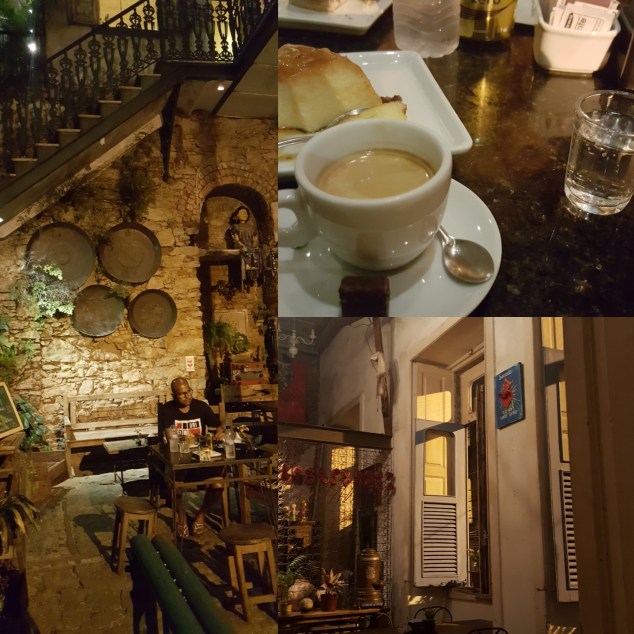
Enjoying a Cuppa in Santa Teresa, Rio De Janeiro
Brussels
Mention Brussels and many things may strike your mind depending on your topic of interest. Home of the European Commission [if you’re the political type], beer [for those into getting Beerified], or Chocolate [for the ones with a sweet taste bud].
But Coffee is an unlikely item that will spring to your mind. To my own surprise, I stumbled not only one but two interesting roasters which happened to be only a few meters apart from each other. One named Café Corico, who had a rather informative display of beans for the guest to choose from. Coffee beans ranging from almost every country you can think of. To name a few, on offer was beans from Ethiopia, Columbia, Nicaragua, Guatemala, Honduras, India, Indonesia, Vietnam, Brazil, Peru, Venezuela… Australia [yes, one could harvest coffee in Australia it turns out! – lesson number 6. What made the coffee here more appealing was the fact that each coffee bean jar had a little description of how they would taste like. The options ranged from strong, bitter, round and creamy, balanced, mild, acidic, fruity..the list went on.
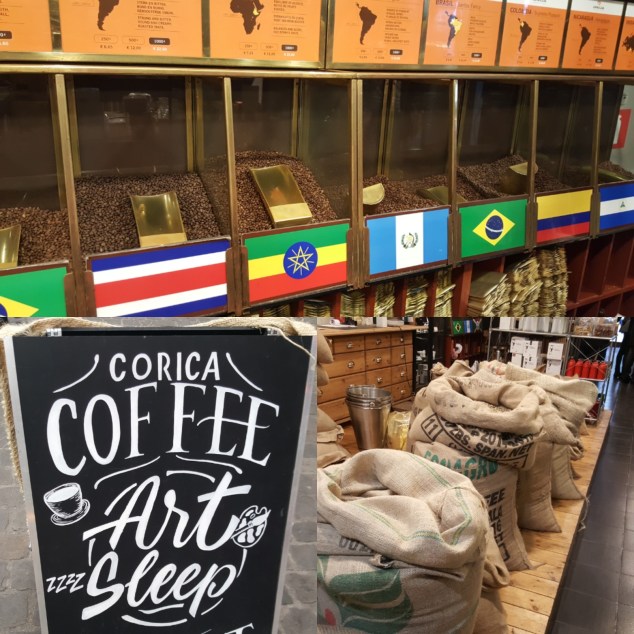
Corica coffee roasters in Brussels, with its beans sourced from world over
A few meters away from Corico was another Roaster named Café Delahaut, roasting its own coffee since 1864. Here I learnt that one of the most modern manufacturers of coffee roasting machines were named ‘Probat’ originating from Germany, made popular due to its sleek designs and computerised control systems – lesson 7. On display was a similar array of coffee beans to Corico but the naming convention for the beans were based on the type of beans rather than the country of origins – ranging from Fair Trade, Decaf, and its own Delahaut roast, to Moka beans [in addition to Mocha the coffee, there is also Moka the beans as well] among others.
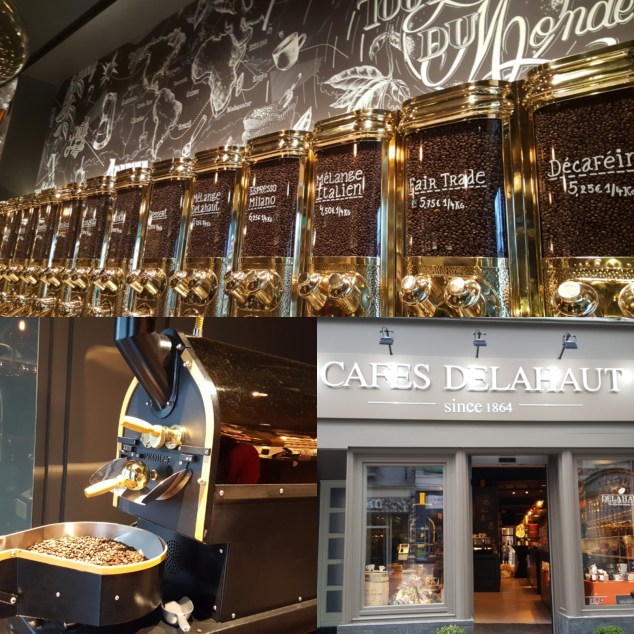
Cafes Delahaut and its sleeky Probat machine
There are a few more I could talk about but before I bore you to sleep with more of my coffee adventure destinations, I shall leave you to it. May I also suggest a cup of coffee of your choice to wake you up. Wish you a delicious coffee filled day.
PS – Some interesting facts about coffee:
- World’s most expensive coffee is called the Civet Coffee [Kopi Luwak] which is a pooped bean from a nocturnal cat called Civet and could cost up to 80 USD per cup.
- There are approximately 45 official coffee exporting countries in the world.
- Brazil, Vietnam, Colombia, Indonesia, Ethiopia, Honduras, India, Uganda, Mexico and Guatemala are the top 10 producers of coffee.
- The two major types of coffee beans are named Arabica (the dearer) and Robusta.
- Before the final cup is brewed, the coffee bean goes through a series of steps from harvesting, to processing and fermenting the cherries, running passed milling machines, grading, sorting, tasting by ‘Cuppa’ and finally grinding for brewing
- The coffee bean from harvest to cup can take upto 4 years.
- Coffee is the second most trade commodity on earth. Oil is the first
- There are generally up to 16 different variations of coffee roast that may impact how your coffee may taste like.
- Stats say 100 million of the 321 million Americans drink coffee daily. Extrapolated on a world population of 7 billion, that translates to 2.1 billion daily coffee drinkers on planet earth.

 Travel Diaries